How to Price Your LEGO Collection (Selling or Insurance)
A step-by-step method to catalogue what you own, value each set at real sold prices, and keep a running total for selling or insurance.
Ranking · 2026If you have spent years buying sealed sets, retired themes, and the odd rare minifigure, one question eventually surfaces: what is all of this actually worth? Whether you are thinking about selling, insuring your collection, or simply curious, the honest answer is that a LEGO collection has no single number. It has a selling value and a replacement value, and those two figures can differ substantially.
This guide walks through a repeatable process for how to value my LEGO collection: catalogue what you own, price each set against real sold data, total it, and keep that total current as the market moves. None of it requires special software or a professional appraisal, but doing it methodically is what separates a defensible valuation from a wishful guess.
Step 1: Catalogue every set you own
You cannot value what you have not listed. Start by building an inventory. For each set, record the set number (the four- or five-digit code on the box), the theme, the year, and its condition. Condition is the single biggest driver of value, so be honest and consistent.
A simple condition scale works well:
- New, sealed (MISB): box unopened, factory seals intact.
- New, opened: bags sealed but box opened or damaged.
- Complete, used: built or loose, all parts and minifigures present.
- Incomplete: missing pieces, instructions, or figures.
For cataloguing, reference databases like Brickset and BrickEconomy are invaluable for confirming set numbers, piece counts, minifigure lists, and original retail prices. If your collection runs to dozens or hundreds of sets, logging them into a portfolio tool such as BrickGains from the start saves re-keying everything later.
Not sure what your set is worth? Compare the best tools free →Cataloguing methods that scale
How you catalogue depends on how much you own. For a handful of sets, a notebook or a phone note is enough. Past twenty or thirty, you want structure, and the method you choose matters because you will repeat it every time you revalue.
Three approaches work in practice. The spreadsheet method gives you one row per set with columns for number, theme, year, condition, purchase price, and current value; it is flexible and free, but every re-valuation is manual. The reference-database method uses Brickset's own collection feature or BrickEconomy to mark sets as owned, pulling in piece counts and retail prices automatically so you are not typing set details by hand. The portfolio-tool method combines both: you log each set once and the tool holds a live value for you. Whichever you pick, capture the set number precisely. A wrong digit points you at the wrong set and quietly corrupts your total.
Photograph sealed and high-value sets while you catalogue. A dated photo of an intact seal is worth far more later, both to a buyer verifying condition and to an insurer verifying that the item existed and was genuinely new.
See the ranking →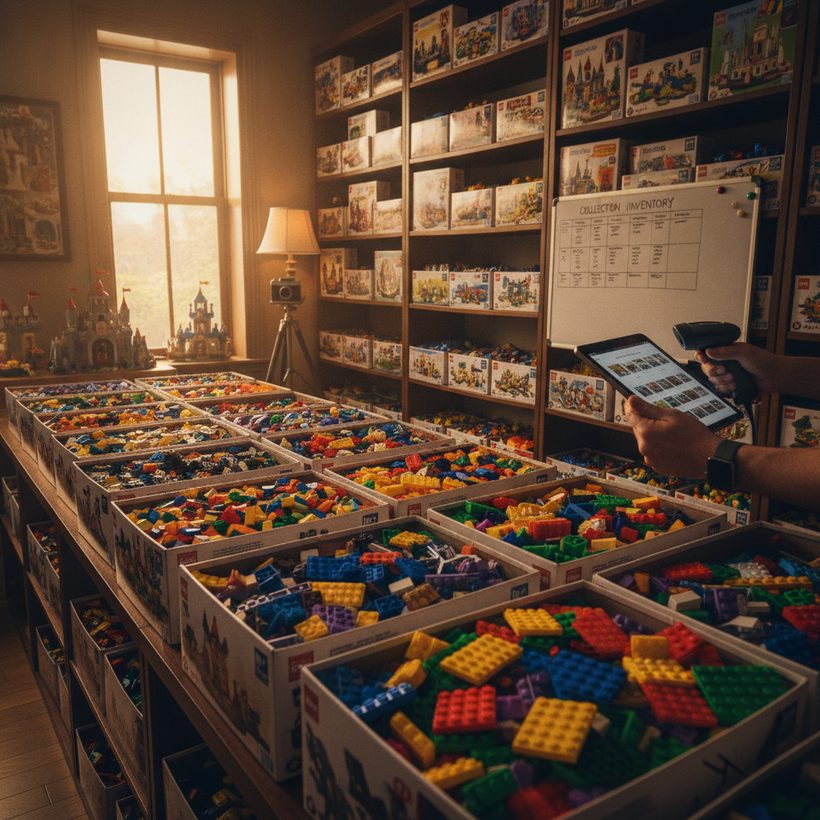
Step 2: Value each set at real sold prices
Here is where many collectors go wrong. The prices sellers ask for on marketplaces are not what sets actually sell for. Aspirational listings can sit unsold for months. What matters is the sold price: what a real buyer recently paid.
For each set, look at recently completed sales in the same condition. Ignore outliers at both ends, and take a realistic middle figure rather than the highest number you can find. Sealed and retired sets command the strongest premiums; used or incomplete sets are worth a fraction of their MISB equivalent. Work in ranges rather than exact figures, because the market genuinely moves within a band.
Per-set valuation in practice
A workable routine per set: pull up completed, sold listings in matching condition; discard the obvious extremes (a mint-boxed unicorn at the top, a damaged bargain at the bottom); and settle on the middle of what remains. If only two or three comparable sales exist, widen your window rather than trust a single data point. Aggregators like BrickEconomy summarise recent sold values and price trends, which is a useful sanity check against the individual sales you find. Note the date of each figure; a sold price from eighteen months ago is a historical footnote, not a current value. When you have finished, a LEGO price comparison across sources helps confirm you have not anchored on one unusually high or low sale.
Step 3: Total the collection
Add your per-set values into a running total. Doing this manually in a spreadsheet is possible, but it becomes tedious and quickly goes stale. This is where a dedicated tracker earns its place. A portfolio tool that holds live values for your whole collection lets you see one aggregate number and drill into individual sets. If you want a single live figure that updates as the market shifts, tracking everything in a live LEGO value tracker is the most efficient route.
As you total, keep two columns rather than one: what you paid and what each set is worth now. The gap between them is your collection's actual performance, and it is almost never uniform. Seeing cost and current value side by side also stops a few standout sets from flattering the whole, which matters most when you move from a market total to a realistic selling figure.
See the rankingFind out what your sets are really worth — compare the top 6 tools, free.See the ranking →Step 4: Selling value vs. insurance value
This is the distinction that trips up most collectors. The two figures answer different questions.
Selling value (market value)
This is what you would realistically receive if you sold today. It reflects sold prices minus the friction of selling: marketplace fees, payment processing, shipping, and the discount buyers expect. Expect your realised selling value to land meaningfully below the headline market total. Selling piecemeal usually nets more per set than offloading the whole collection in one lot, but it costs far more time and effort, and that trade-off is yours to weigh.
Insurance / replacement value
Insurance works the other way. If your collection were lost, stolen, or damaged, replacement value is what it would cost you to buy equivalent sets again at current prices. For retired or sealed sets, that can be well above what you originally paid, and above your net selling value. When documenting a collection for a home contents or specialist policy, you generally want replacement value backed by a dated, itemised inventory.
See the ranking →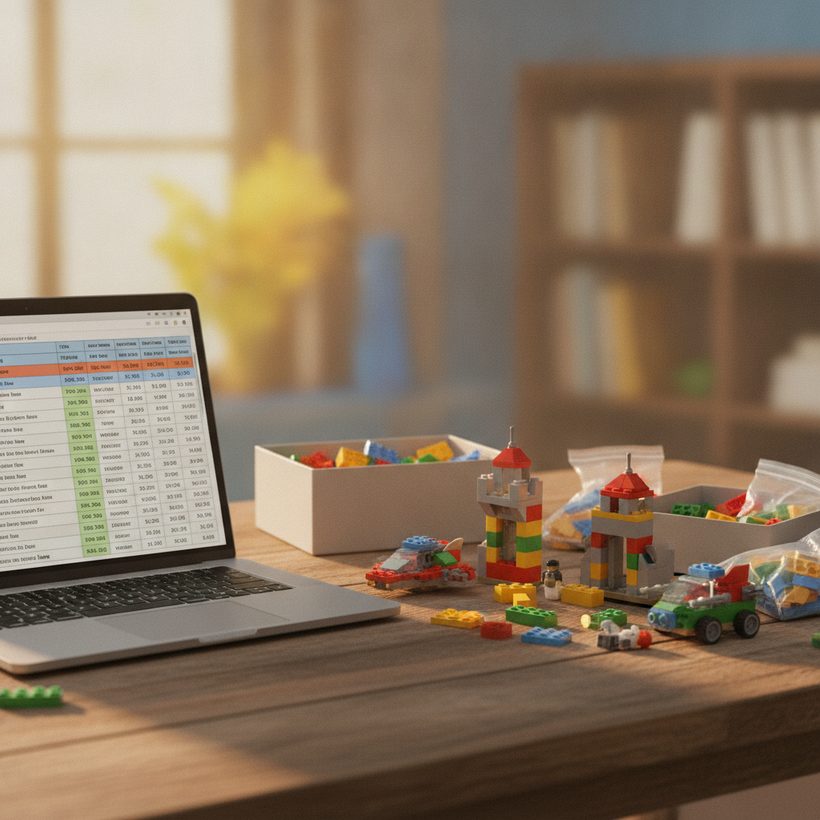
Documenting the collection for insurers
An insurer will not take "I have a lot of LEGO" at face value, and a vague figure is the fastest route to a disputed or reduced claim. Prepare a document you could hand to an adjuster tomorrow. At minimum it should include an itemised list of sets by number and condition, a current replacement value per set with the date you sourced it, supporting photographs of sealed or high-value items, and any purchase receipts you still hold.
A few practical points make that documentation hold up. Keep it dated, since replacement values move and an insurer wants to know when yours were captured. Store a copy off-site or in the cloud, because a document that burns with the collection protects nobody. Value at replacement cost, not what you paid, and be ready to show how you arrived at each figure. Check whether standard home contents cover is enough; high-value collections often exceed single-item or category limits and may need a scheduled or specialist policy. A portfolio export that lists every set with a current value and a timestamp is close to exactly the record an underwriter wants to see.
Step 5: Keep the valuation current with a portfolio
A LEGO valuation is a snapshot, not a permanent fact. Sets retire, demand spikes around anniversaries or media releases, and prices drift. A number you calculated a year ago may be well off today. Revisit your inventory periodically, refresh the sold-price figures, and update your total.
Practically, this is the strongest argument for a portfolio tool over a static spreadsheet: it re-values your holdings automatically so your total stays accurate without manual rework. Treating your collection as a portfolio also reframes it usefully. You can watch which themes are appreciating, spot when a set has peaked, and decide whether to hold or sell on evidence rather than instinct. For selling, that tells you when the market is favourable. For insurance, it means your documented replacement value reflects reality if you ever need to make a claim, rather than a figure you last touched years ago.
A note on realistic expectations
Finally, keep perspective. Most modern retail sets do not appreciate; a minority of retired, in-demand, or sealed sets carry the collection's value. Value the whole thing honestly, distinguish selling from replacement, and treat any figure as a range within a moving market rather than a fixed price. Done consistently, this method gives you two numbers you can actually defend: one for the day you decide to sell, and one for the day you hope you never have to claim.
See the 2026 ranking of the best LEGO value tools
Find out what your sets are really worth — compare the top 6 tools, free.
See the rankingFrequently asked
How do I value my LEGO collection accurately?
Catalogue every set by number and condition, price each one against recently sold prices (not asking prices) in matching condition, then total those figures. Use reference sites like Brickset and BrickEconomy to confirm set details, and a portfolio tool to track the running total over time.
What is the difference between selling value and insurance value?
Selling value is what you would realistically receive today after marketplace fees, shipping, and buyer discounts, so it sits below the market total. Insurance or replacement value is what it would cost to buy equivalent sets again at current prices, which for retired or sealed sets can be higher.
Do asking prices reflect what LEGO sets are worth?
No. Asking prices on marketplaces are aspirational and listings can go unsold for months. Value sets using recently completed, sold prices in the same condition, ignoring extreme high and low outliers, and work in ranges rather than exact figures.
How should I document my LEGO collection for insurance?
Prepare a dated, itemised list of sets by number and condition with a current replacement value for each, supported by photographs of sealed or high-value items and any receipts. Store a copy off-site or in the cloud, value at replacement cost rather than what you paid, and check whether your home contents policy has limits that require specialist cover.
How often should I update my LEGO collection valuation?
Treat any valuation as a snapshot. Prices shift as sets retire and demand changes around anniversaries or media releases, so revisit at least a few times a year. A portfolio tool that re-values holdings automatically keeps your total current for both selling decisions and insurance documentation.