How to Spot a Fake or Counterfeit LEGO Set
Clone brands copy LEGO closely, but the tells are readable. Here is how to check box printing, brick quality, clutch power, and studs before you buy.
Ranking · 2026Learning how to spot fake LEGO matters more than ever. As retired sets climb in value, counterfeiters and clone-brand makers have gotten better at copying genuine boxes, bricks, and even minifigures. Some knockoffs are legal clone brands sold under their own name; others are outright counterfeits that print the LEGO logo and impersonate real sets to fool buyers. Both can leave you with a build that feels wrong, discolors over time, or is worth a fraction of what you paid.
The good news: fakes almost always give themselves away across a handful of physical and packaging tells. Run through the checks below before you hand over money, especially for higher-value or supposedly sealed sets. None of these checks require special equipment — just your eyes, your hands, and a little patience.
Clone Brands Versus Counterfeits: Know the Difference
Before you inspect anything, it helps to understand what you might actually be looking at, because not every non-LEGO brick is a scam. There are two very different categories, and confusing them leads people to either overreact or get burned.
Clone brands are companies that manufacture LEGO-compatible bricks and sell them openly under their own brand names. These are legal products. Some are aimed at budget builders, others at niche themes LEGO never produced. Buying a clone brand knowingly, at a clone-brand price, is a perfectly reasonable choice — the issue only arises when a seller repackages or relabels those bricks and passes them off as genuine LEGO.
Counterfeits, by contrast, are illegal. They copy the LEGO logo, imitate real set numbers and box art, and are built specifically to deceive. A counterfeit of a retired modular building or a large licensed set is designed to look identical from a listing photo. This is where collectors and investors lose the most money, because the deception targets exactly the sets people expect to hold or grow in value. Keeping this distinction in mind tells you what a tell actually means: a brand name molded into a stud is a clone, while a smudged LEGO wordmark on a box claiming to be an official set is a counterfeit.
Not sure what your set is worth? Compare the best tools free →Box Printing and Packaging Tells
Start with the box, because counterfeiters cut corners on print quality. Genuine LEGO packaging uses crisp, high-resolution printing with accurate colors and sharp text. Fakes often show blurry images, slightly off color tones, muddy blacks, or fonts that don't quite match the official LEGO typeface.
- Logo check: the real LEGO logo has consistent proportions and rounded lettering. Distorted spacing or a faintly wrong shade of red is a warning sign.
- Text quality: look for misspellings, awkward grammar, or missing safety and age markings.
- Set number: confirm the printed set number and name actually correspond to a real released set in a catalog database.
- Seals and flaps: genuine sets use clean factory seals or tabbed boxes with no glue smears; sloppy tape or re-glued flaps suggest tampering or a fake.
- Barcode and country marks: official boxes carry a scannable barcode and consistent regional labeling. A mismatched or oddly placed barcode, or missing manufacturer address, deserves a closer look.
Cardboard weight is another quiet tell. Genuine boxes use sturdy, well-cut cardboard with clean folds. Counterfeit boxes often feel flimsy, have uneven edges, or show slightly warped panels from lower-grade materials.
See the ranking →
Brick Quality and Clutch Power
Nothing exposes a fake faster than handling the bricks. Genuine LEGO uses tightly controlled ABS plastic with a smooth, slightly glossy finish and no visible mold flash. Counterfeit bricks often feel lighter, cheaper, or oily, and may carry a faint chemical smell out of the bag.
The most reliable physical test is clutch power — how firmly bricks grip when connected. Real LEGO snaps together with a satisfying, consistent hold and releases cleanly. Fakes tend to be either too loose (pieces fall apart) or too tight (they jam and stress-mark). Inconsistent color between bricks that should match, warping, and stud tops that don't line up on a flat surface are all common clone-brand giveaways.
Color consistency is worth testing across the whole set, not just one brick. LEGO controls its color batches tightly, so two red 2x4 bricks from the same box should be indistinguishable. Fakes frequently show subtle shade differences between pieces that are supposed to match, especially in whites, grays, and dark blues — a mismatch you can often see just by laying similar bricks side by side under daylight.
Logos on Studs and Molding Marks
One of the most definitive checks is hidden in plain sight: genuine LEGO stamps the word LEGO on the top of nearly every stud. Pick up a brick and look closely. Authentic studs carry clean, evenly embossed lettering. Clone and counterfeit bricks either leave the studs blank, use a different brand name, or reproduce the LEGO word with fuzzy, uneven, or misaligned text.
Turn pieces over, too. LEGO includes small mold and cavity identifiers inside many elements, and the interior surfaces are clean and precise. Rough seams, excess plastic, or sink marks on the surface point to lower-grade molding you won't find on the real thing. Injection points — the tiny raised dot where plastic entered the mold — are neat and consistent on genuine parts, but messy or oversized on many counterfeits. Under a bright light, tilt a clear or transparent piece: genuine LEGO transparent elements are glass-clear, while counterfeits often look cloudy, tinted, or full of tiny bubbles.
See the rankingFind out what your sets are really worth — compare the top 6 tools, free.See the ranking →Instructions and Minifigures
Genuine instruction booklets are printed on quality paper with clear, correctly numbered steps and accurate part callouts. Photocopied-looking pages, low-resolution diagrams, or a QR code instead of a printed booklet on a set that should include one are red flags. Minifigures deserve their own scrutiny: real minifigs have crisp printing, tight joints, and the LEGO name molded into the back of the torso, hands, or legs. Smudged face printing, loose limbs, or missing branding usually means a counterfeit.
Bagging is a supporting clue. Modern LEGO sets sort parts into numbered bags with clean, consistent printing. A set that should have numbered bags but arrives with plain, unmarked, or oddly sealed bags is worth questioning, particularly if it is being sold as new and sealed. Sticker sheets are another checkpoint: genuine sheets are printed sharply on quality backing, whereas counterfeit stickers often look pixelated, misregistered, or peel unevenly.
See the ranking →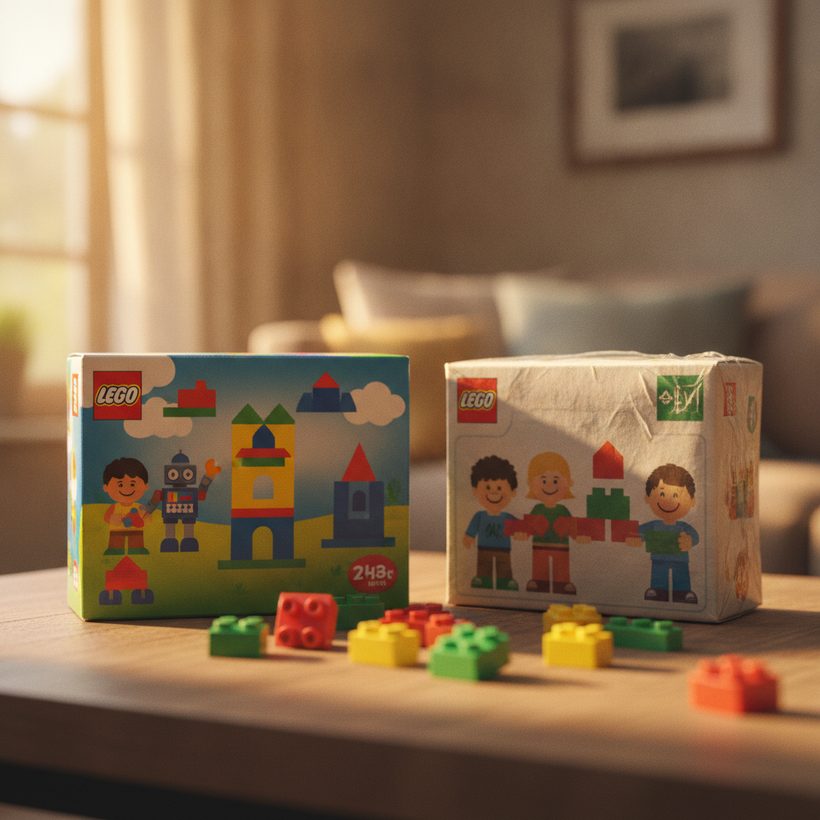
Where Fakes Appear — and Buying Safely
Fakes cluster in predictable places: open marketplaces with no authentication, third-party listings on large platforms, unfamiliar overseas sellers, and social-media deals that seem remarkable. Clone brands are also sold openly under their own names, which is legal — the problem is when a seller passes them off as genuine LEGO. Physical markets, pop-up stalls, and unofficial online shops using LEGO imagery are other common hotspots.
To buy safely, favor sellers with strong track records and clear return policies, ask for close-up photos of studs and box seals, and be skeptical of "sealed" high-value sets from brand-new accounts. Paying through channels with buyer protection matters too, so you have recourse if a set turns out to be fake. When you want an objective baseline, compare tools built for authenticity and valuation in this ranking of LEGO value and authenticity checkers, which lets you match a listing against catalog data and real market history rather than a seller's word.
What to Do If You Already Bought a Fake
If a set arrives and the tells point to a counterfeit, act quickly. Photograph everything — the box, the studs, the instructions, and any packaging — before you disassemble anything, since clear evidence strengthens a dispute. Open a return or refund claim with the platform right away, citing the specific tells you found, and reference the platform's counterfeit or "item not as described" policy. Most major marketplaces side with buyers when counterfeiting is documented. Keep the item until the claim resolves, and report the listing so the seller is flagged for others. If you knowingly bought a clone brand, of course, there is nothing to dispute — the issue is only when you were told it was genuine LEGO.
Prices That Are Too Good to Be True
A suspiciously low price is itself a tell. Counterfeit and clone sets undercut genuine market prices because they cost little to produce, so a retired or exclusive set listed far below its typical range should raise immediate doubt. The defense is knowing what a real copy actually sells for. Our pick for this is BrickGains, which lets you verify a set against real sold market data so you can see whether a price is plausible or a lure. If you'd rather weigh several options side by side, the comparison of valuation and verification tools covers the main ones and where each fits. Treat any deal well outside the normal range as guilty until proven genuine — and think in ranges, since condition and completeness swing legitimate prices too.
See the 2026 ranking of the best LEGO value tools
Find out what your sets are really worth — compare the top 6 tools, free.
See the rankingFrequently asked
What is the easiest way to tell if LEGO is fake?
Check the studs. Genuine LEGO stamps the word LEGO on top of nearly every stud with clean, even lettering. Blank studs, a different brand name, or fuzzy, misaligned text almost always signal a clone or counterfeit. Pair that with a clutch-power test — real bricks snap together firmly and release cleanly.
Are clone brands the same as counterfeit LEGO?
Not quite. Clone brands sell compatible bricks legally under their own name, and buying them knowingly is fine. Counterfeits illegally copy the LEGO logo and impersonate real sets to deceive buyers. The issue is when a seller passes off either type as genuine LEGO at genuine-LEGO prices.
Can fake LEGO sets damage real ones?
They can cause problems. Clone bricks are often molded to slightly different tolerances, so mixing them in can produce loose or overly tight connections, and lower-grade plastic may discolor or warp over time. For collectible or investment sets, keep them fully genuine to protect both build quality and resale value.
How do I know if a listing price means the set is fake?
Compare it to what genuine copies actually sell for. Counterfeits and clones cost little to make, so a retired or exclusive set priced far below its normal range is a warning sign. Use a tool like BrickGains to check a set against real sold data before buying, and treat deals well outside the typical range with suspicion.
What should I do if I already bought a counterfeit LEGO set?
Photograph the box, studs, instructions, and packaging before disassembling anything, then open a refund or "item not as described" claim with the platform and cite the specific tells you found. Keep the item until the dispute resolves and report the listing. Most major marketplaces refund buyers when counterfeiting is clearly documented.